
Watching the recent drama on X (formerly Twitter) involving Ezra Olubi and Maki Spoke (Chiamaka) got me thinking. You see it happen all the time on the Nigerian internet space. One minute, someone is minding their business, and the next, they are the main character in a firestorm of accusations, hot takes, and brutal quote-tweets. The digital mob gathers with terrifying speed, and suddenly, a reputation built over years is at risk of being torn down in a matter of hours.
It’s a scary thought. We all live parts of our lives online, whether for business or for pleasure. And in this arena, perception can quickly become reality. When the outrage machine turns its eye on you, it feels like the entire world is collapsing. Your mentions are a war zone, your DMs are full of vitriol, and your phone won’t stop buzzing. The natural human reaction is to fight back, to defend yourself, to type frantically with shaking hands to clear your name. Trust me, I have been at the end of the barrel multiple times, and I have experimented with different tactics on how to get away with this, irrespective of whatever you may have done, even if you did commit an actual crime!
Therefore, I’m here to tell you that your first instinct is almost always the wrong one.
Surviving a social media scandal is a game of strategy, not speed, not eloquence, not even innocence.
It requires a cool head when everything around you is on fire. So, what do you do when you wake up and find yourself at the centre of a social media execution? Forget everything you think you know about damage control and follow this playbook. Here are the four things you must do immediately.
1. Log Off. Immediately.
I cannot stress this enough. The very first and most important thing you must do is shut your mouth and or your laptop. Log out of all your accounts. Turn off your notifications. Give your phone to a trusted friend if you have to. Your brain, high on a cocktail of adrenaline and cortisol, is your own worst enemy in this moment. Every tweet you send in anger, every defensive comment you post, is just more fuel for the fire. Beyond logging off, you need to deactivate your social media account.
You will have the urge to correct the record. You will want to argue with the faceless accounts calling you every name under the sun. You’ll feel an intense pressure to say something, anything, to control the narrative. This is a trap. The mob doesn’t want nuance or explanations; it wants a spectacle. It wants a fight. By engaging emotionally, you give them exactly what they are looking for.
This initial period of silence/absence is your strategic retreat. It’s where you take a breath, step away from the digital noise, and prevent yourself from making a bad situation catastrophically worse. This isn’t surrender; it’s the tactical high ground. The conversation will rage on without you for a bit, and that’s okay. You cannot win a war by fighting on a thousand fronts at once. Your first job is to protect yourself from your own impulses.
2. Assemble Your ‘War Room’
You cannot navigate a crisis alone. While you’re logged off, your next immediate step is to get on the phone and assemble a small, trusted circle of advisors. This is your personal war room. It should consist of people who are not emotionally compromised and can think clearly. This isn’t the time for friends who will tell you what you want to hear or echo your outrage.
Who should be in this room? It could be your lawyer, especially if there are legal implications. It could be a PR professional or a communications expert. It could also be a wise mentor, a business partner, or a deeply level-headed friend who understands the dynamics of these situations. In fact, I recommend someone you are not close to but whom you trust to make sound judgments to be in this discussion circle! The key criteria are objectivity and wisdom.
Your job is to present the facts to them as clearly as possible. Their job is to look at the situation from the outside and help you see the bigger picture. Are you actually in the wrong? Is this a coordinated attack? Is it a misunderstanding that can be cleared up? You are too close to the blast radius to assess the damage accurately. Your war room provides the external perspective you desperately need to move from panicked reaction to calculated response.
3. Diagnose the ‘Crime’
With your war room assembled and your emotions in check, it’s time to become a detective. You need to clinically and dispassionately figure out what the actual accusation is. Social media mobs often lump many things together, so you need to cut through the noise to find the core issue. Every scandal falls into one of a few categories, and your strategy depends entirely on which one you’re facing.
-
The Genuine Mistake: Did you actually mess up? Did you say something foolish, post something insensitive, or make a real error in judgment? If so, the path forward will involve some form of accountability. You can’t strategise your way out of a genuine fault without first acknowledging it.
-
The Misunderstanding: Was what you said or did taken completely out of context? Is the outrage based on a misinterpretation of your words or actions? This requires a strategy of clarification, but it must be handled delicately to avoid sounding defensive or dismissive of people’s feelings. This is one of the cases of Ezra’s old tweets.
-
The Malicious Attack: Is this a targeted hit job? Is someone with an agenda spreading lies or half-truths to damage your reputation intentionally? This is a different kind of battle, and a direct response might be exactly what the attacker wants. Sometimes, the best response here is strategic silence or a legal one.
You and your war room must get to the root of the issue. You cannot craft a response until you understand precisely what you are responding to. Gather the receipts, look at the evidence, and make an honest assessment.
4. Craft Your First Response (Or Non-Response)
Only after you’ve completed the first three steps are you ready to even think about making a public statement. Notice that this is the final step in the immediate response phase. Your first public move sets the tone for everything that follows, and it must be deliberate. Based on your diagnosis, you have a few options. Ezra’s first public move on his predicament is definitely going to endear him to the public in the court of public opinion, considering how the sentiment would be swayed in the direction of using a hammer to hurt a fly against Stripe, the owners of Paystack.
If it was a genuine mistake, a swift, sincere, and unambiguous apology is often the best path. It should take full responsibility without making excuses. A good apology can de-escalate a situation faster than anything else.
If it’s a misunderstanding, a calm, clear statement providing the necessary context can work. It should acknowledge how it could have been misinterpreted while clarifying your original intent.
If it’s a malicious attack, the best move is often to say nothing at all on the platform where it’s happening. Engaging gives the trolls legitimacy. Instead, you might issue a formal statement through a lawyer or a different channel, or you might choose to ignore it entirely, depriving the fire of oxygen. Sometimes, a holding statement like “I’m aware of the conversations happening, and I’m taking time to listen and understand before responding” can buy you valuable time.
The key is that your first communication must be intentional. It is the chess move that can start to turn the tide.
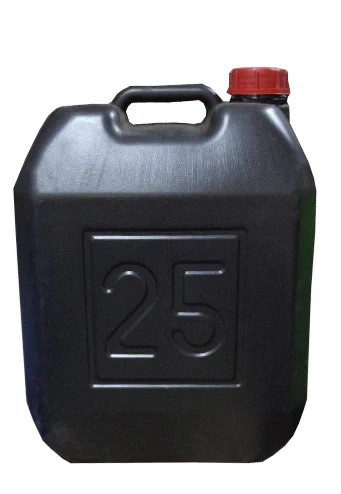
Navigating a social media scandal feels like trying to drink water from a 25-litre jerry can/keg. But it is survivable. The key is to resist the primal urge to fight back immediately. Step back, breathe, gather your people, understand the problem, and then, only then, act.
What do you think? Is there anything you’d add to this emergency playbook? Let me know in the comments.